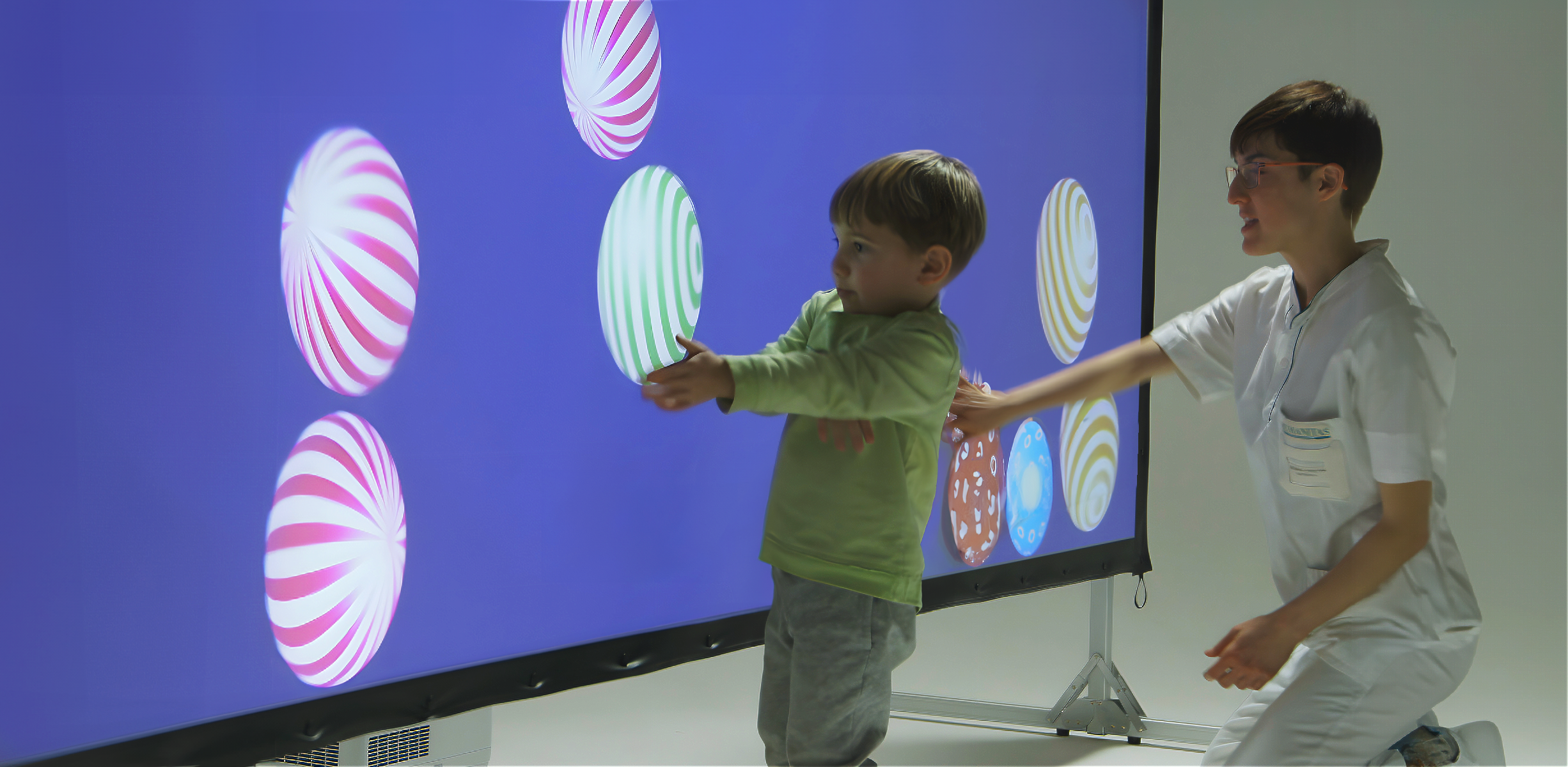
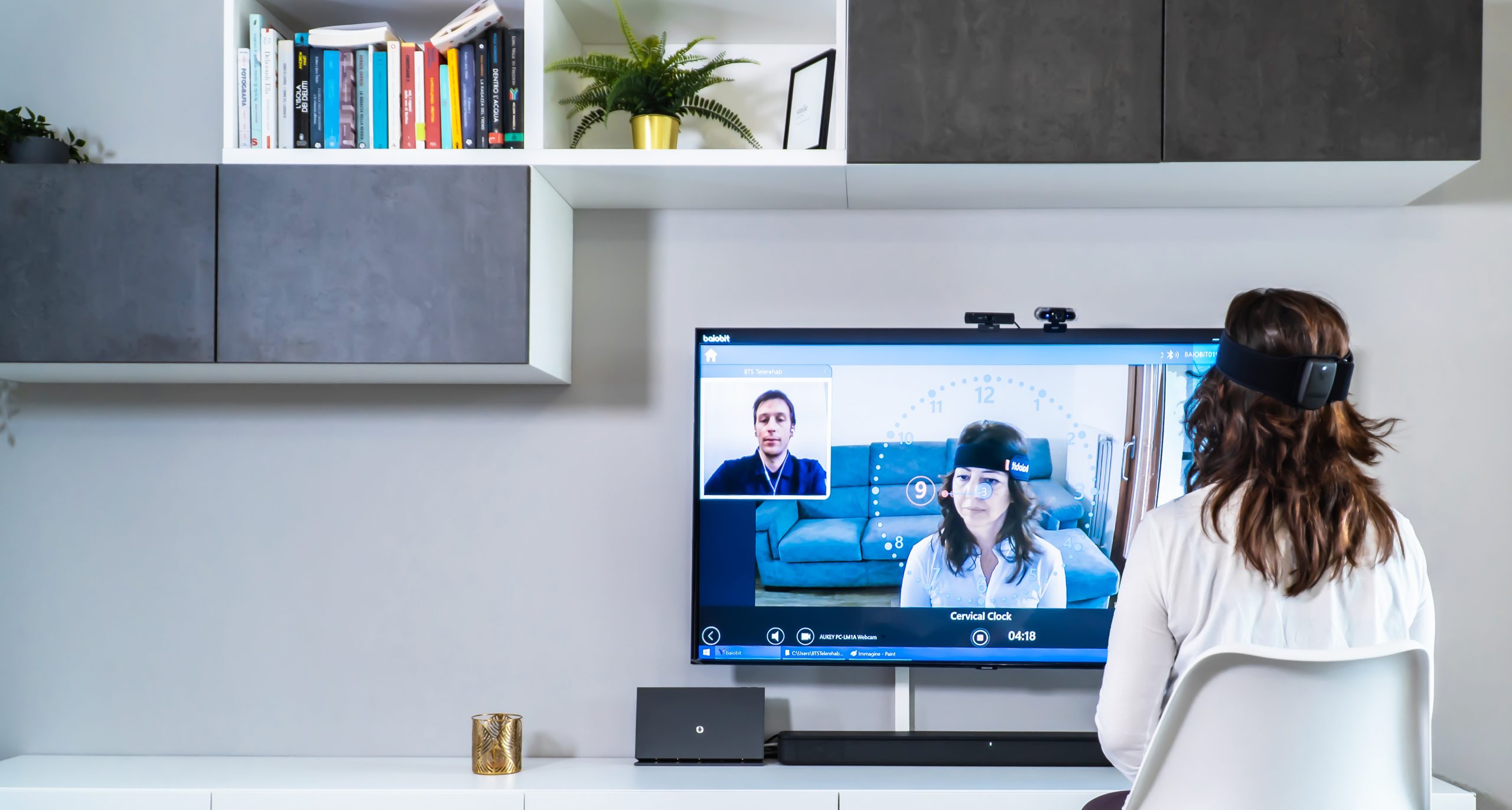

Proprioceptive Assessment and Training
Proprioceptive training improves balance, coordination, and injury prevention.
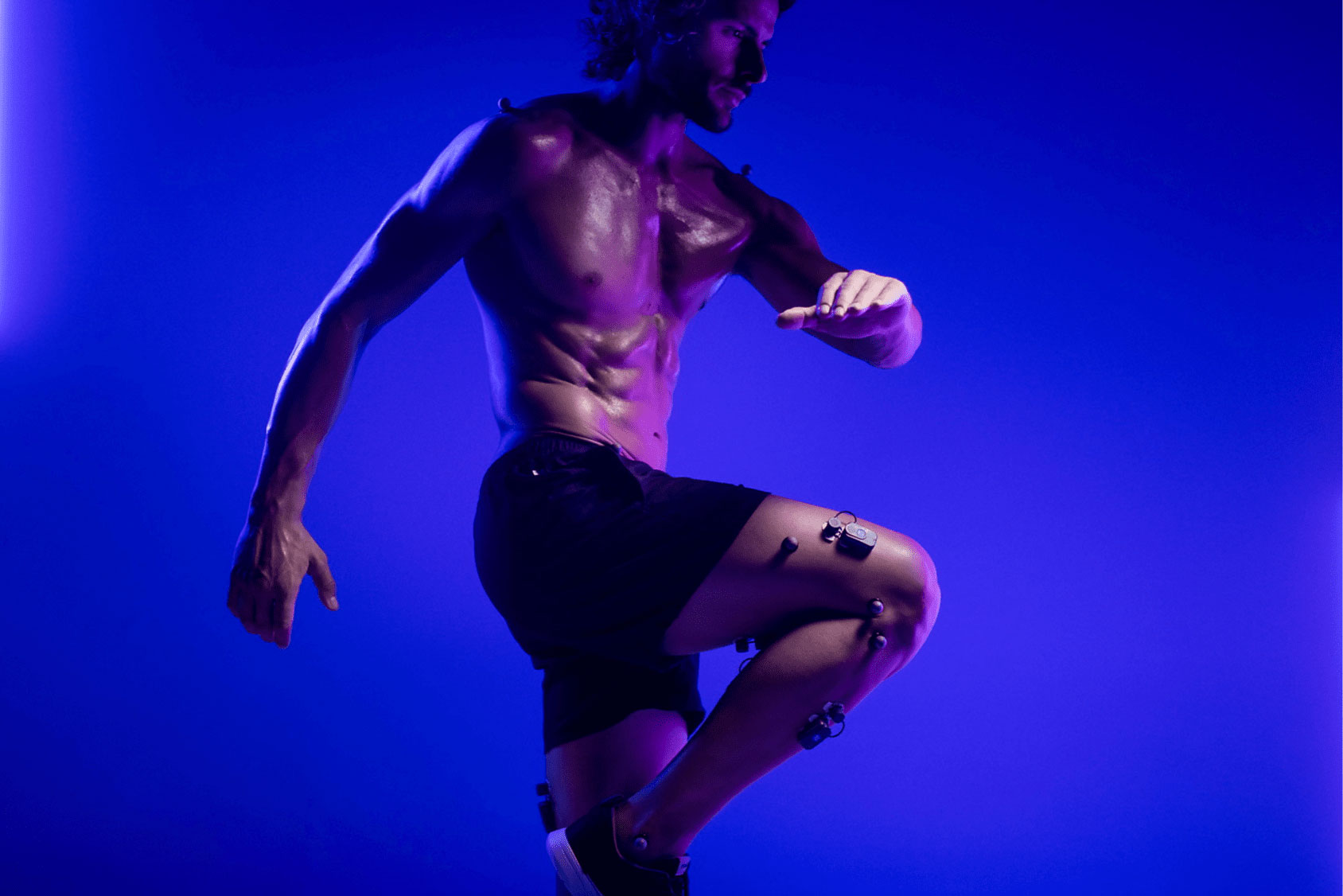
Our biomechanical analysis systems support athletes, coaches, and professionals in the study of human movement. From inertial sensors and force platforms to 3D systems integrated with electromyography, we provide scientifically validated tools to enhance performance, prevent injuries, and support a safe and effective return to sport.











| System | Test Time | Environment | Test Purpose | Depth of Analysis | Technology |
|---|---|---|---|---|---|
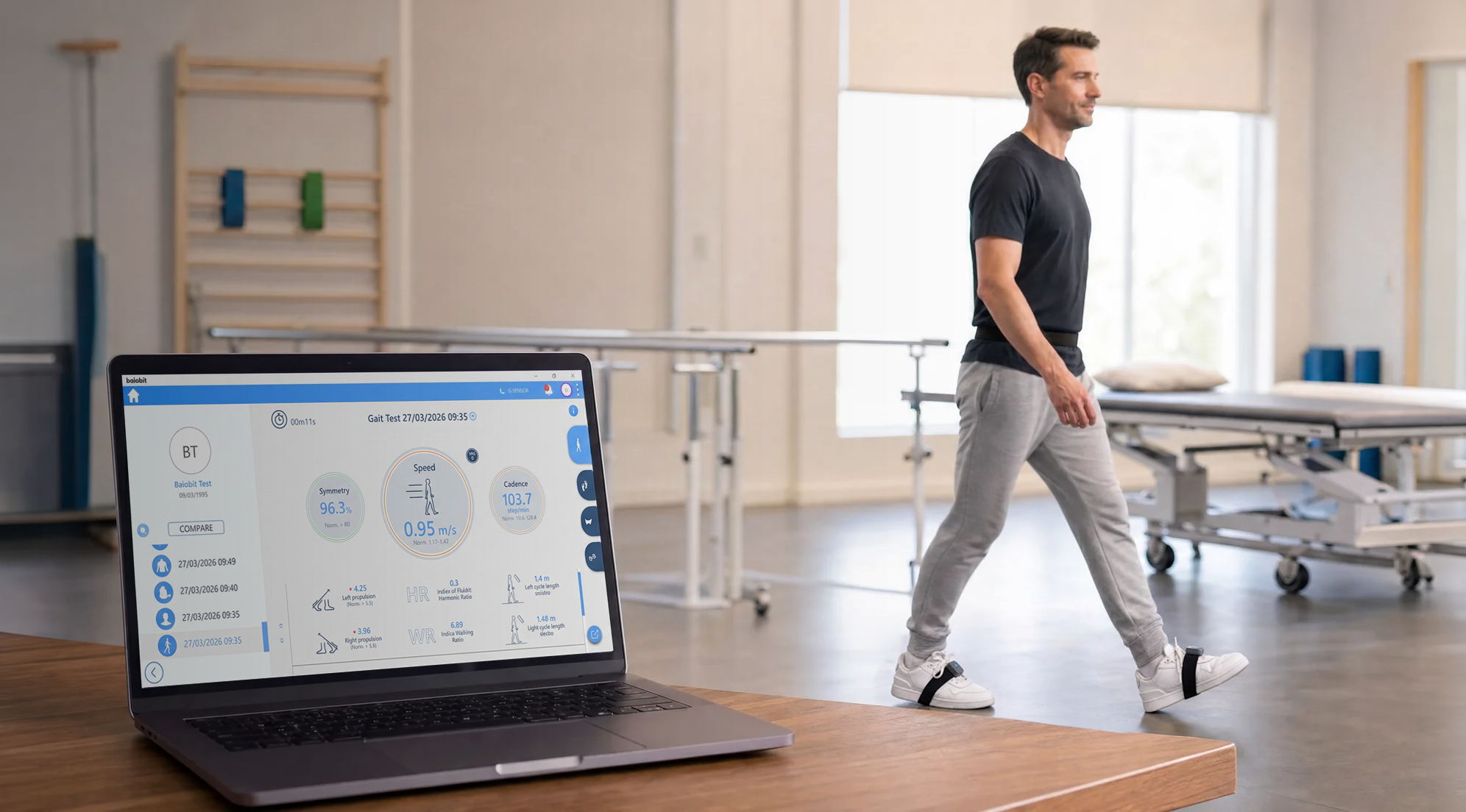
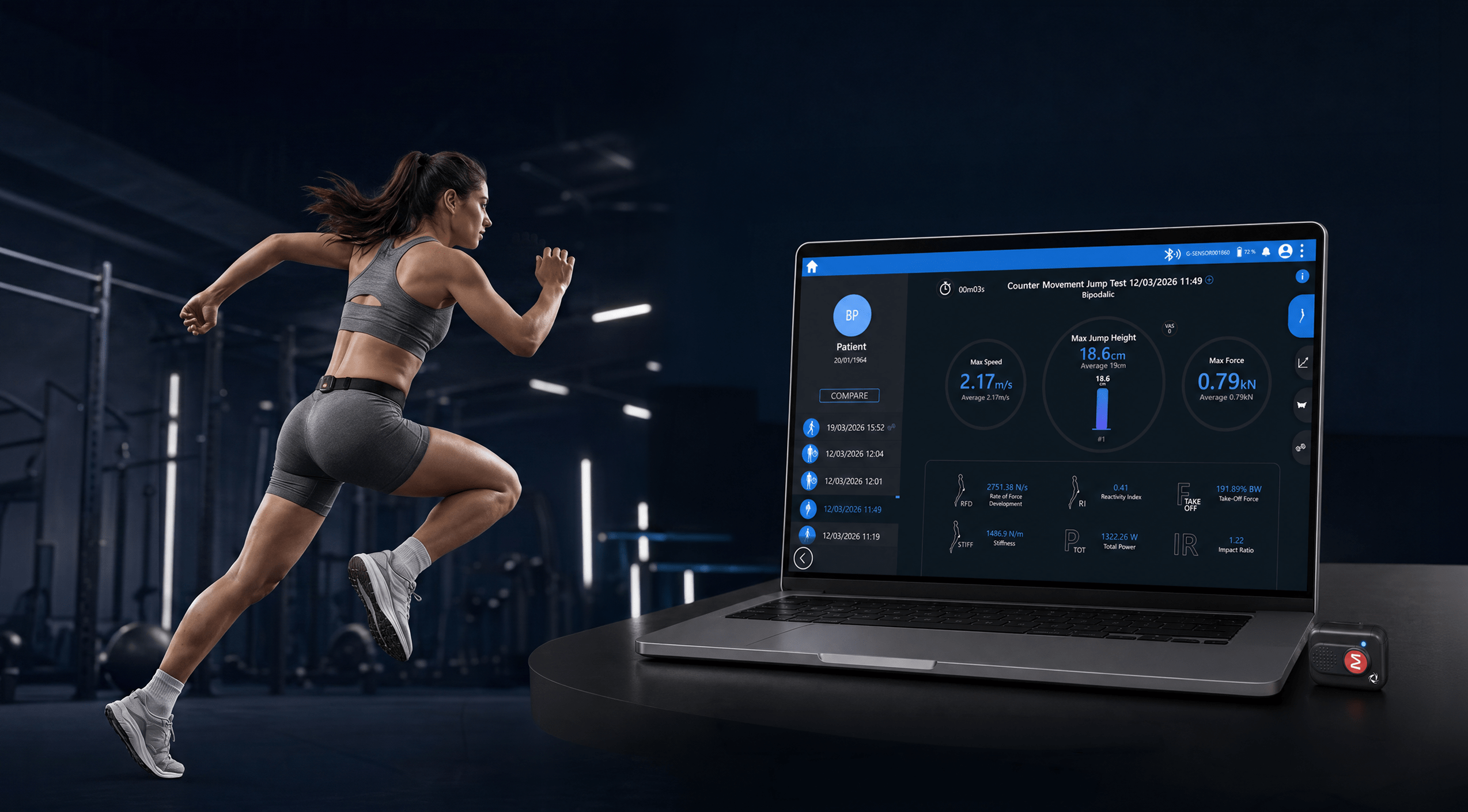
| G-SPORT | 5 min | Field / Gym | Balance, Symmetry, Proprioceptive Assessment | Screening | Inertial sensors |
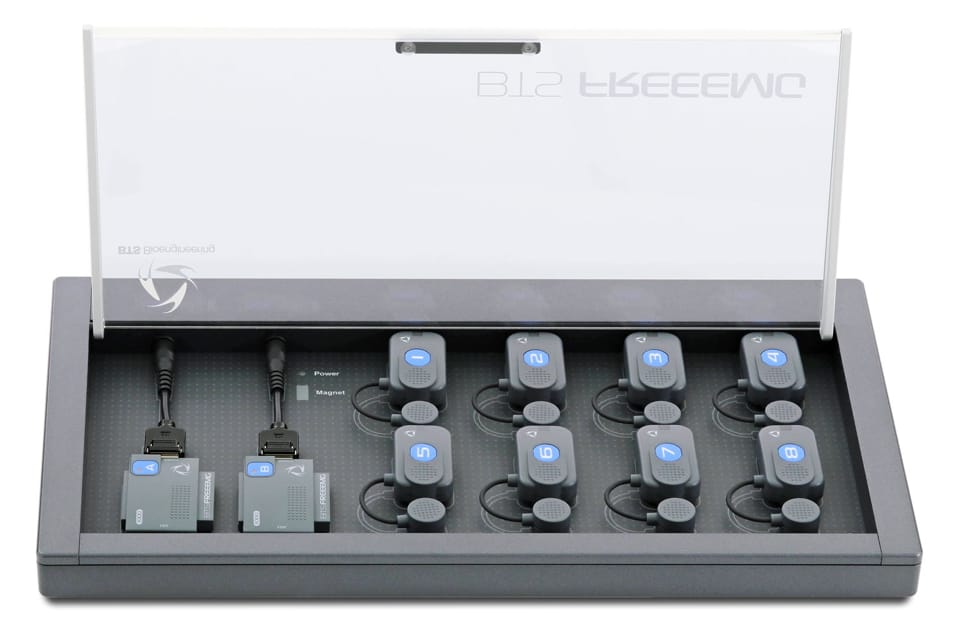
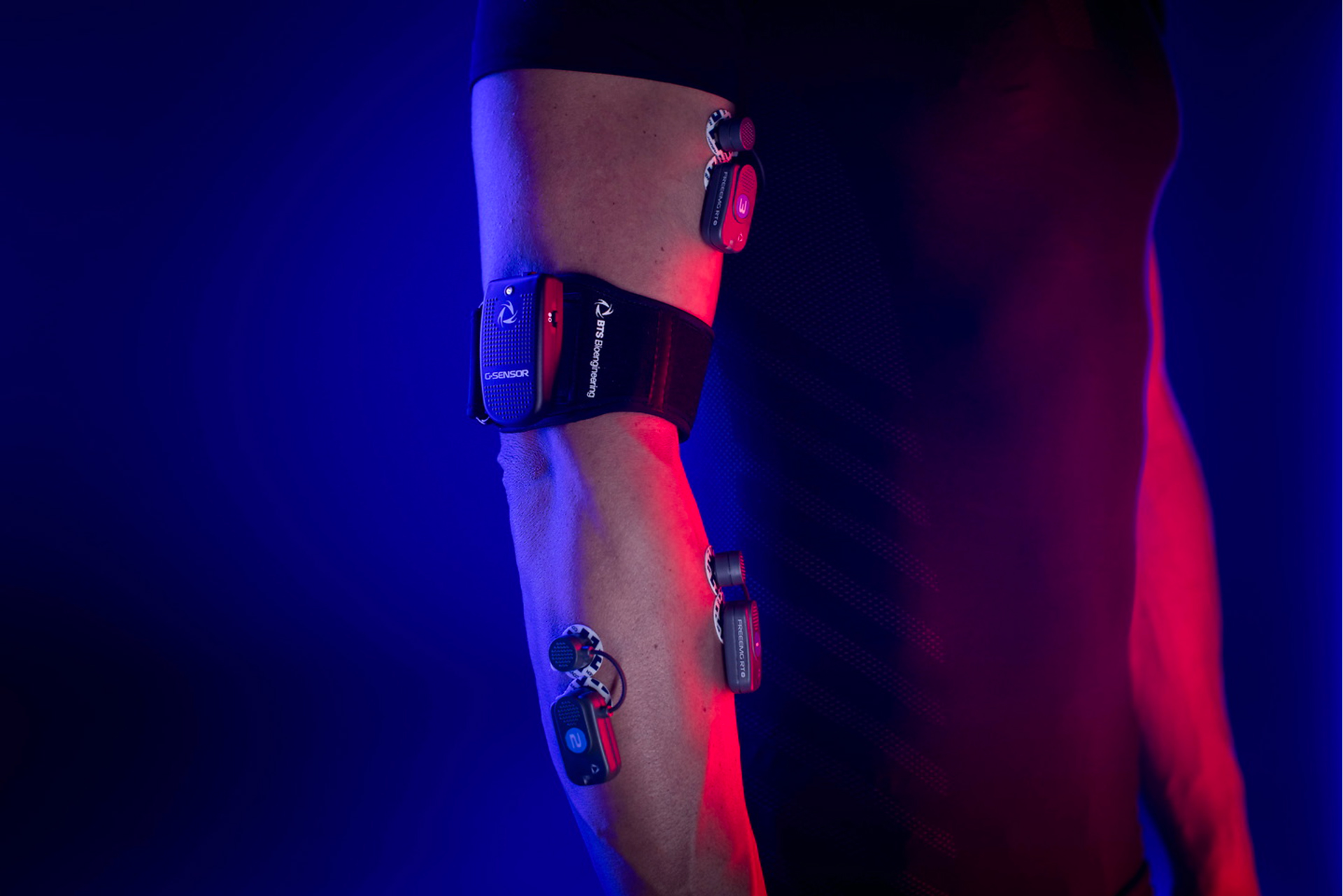
| G-SPORT + Freeemg | 15 min | Field / Gym | Balance, Symmetry, Functional Assessment | Functional | Inertial sensors + sEMG |
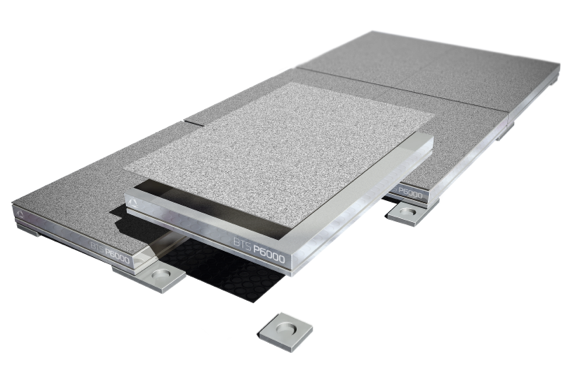
| Podium | 5 min | Gym | Biofeedback, Return to Play | Screening | Force plates |
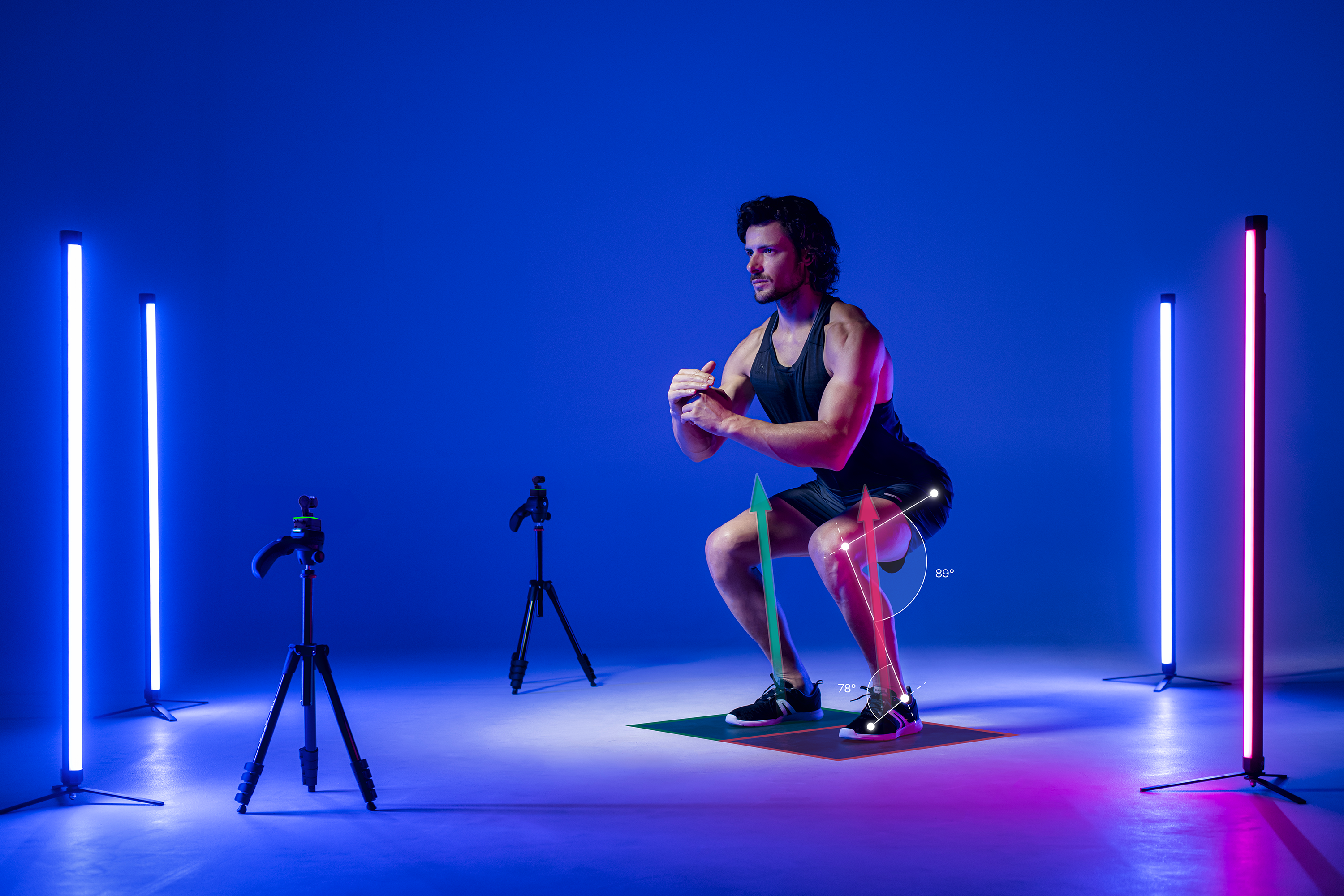
| Podium 3D | 5 min | Gym | Biofeedback, Return to Play, Performance, 3D Biomechanical Analysis on place | Functional | Force plates + Color cameras |
| Podium Lab | 5 min | Gym/Laboratory | Biofeedback, Return to Play, Performance, Free 3D Biomechanical Analysis | Functional | Force plates + Color cameras |
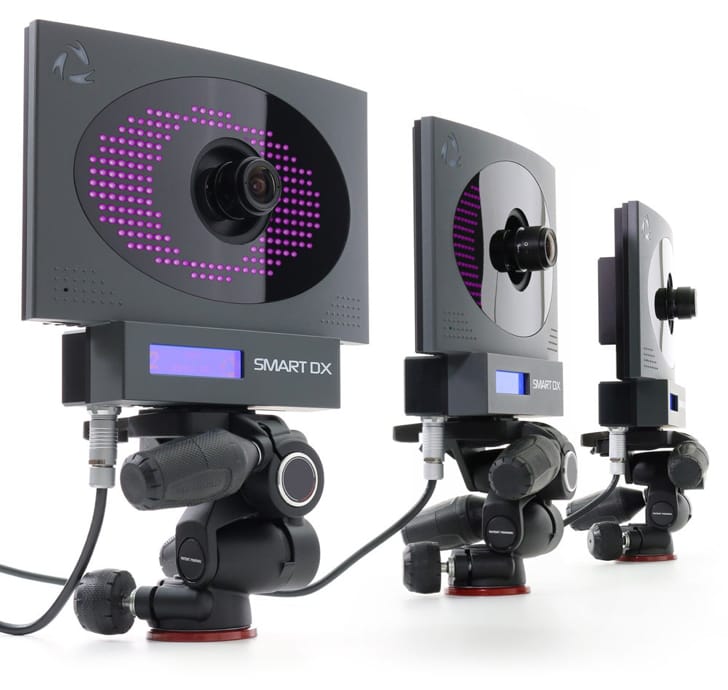
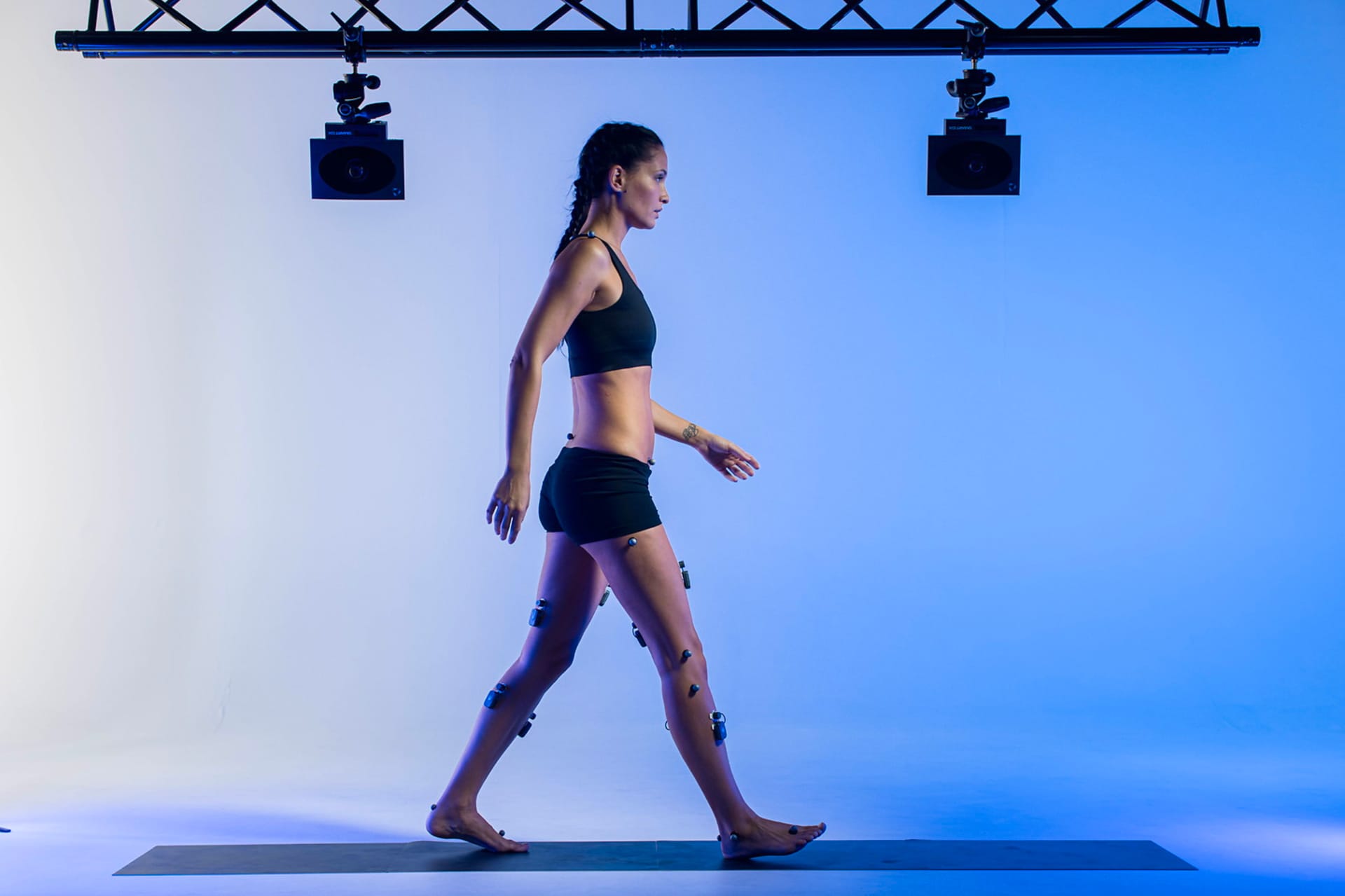
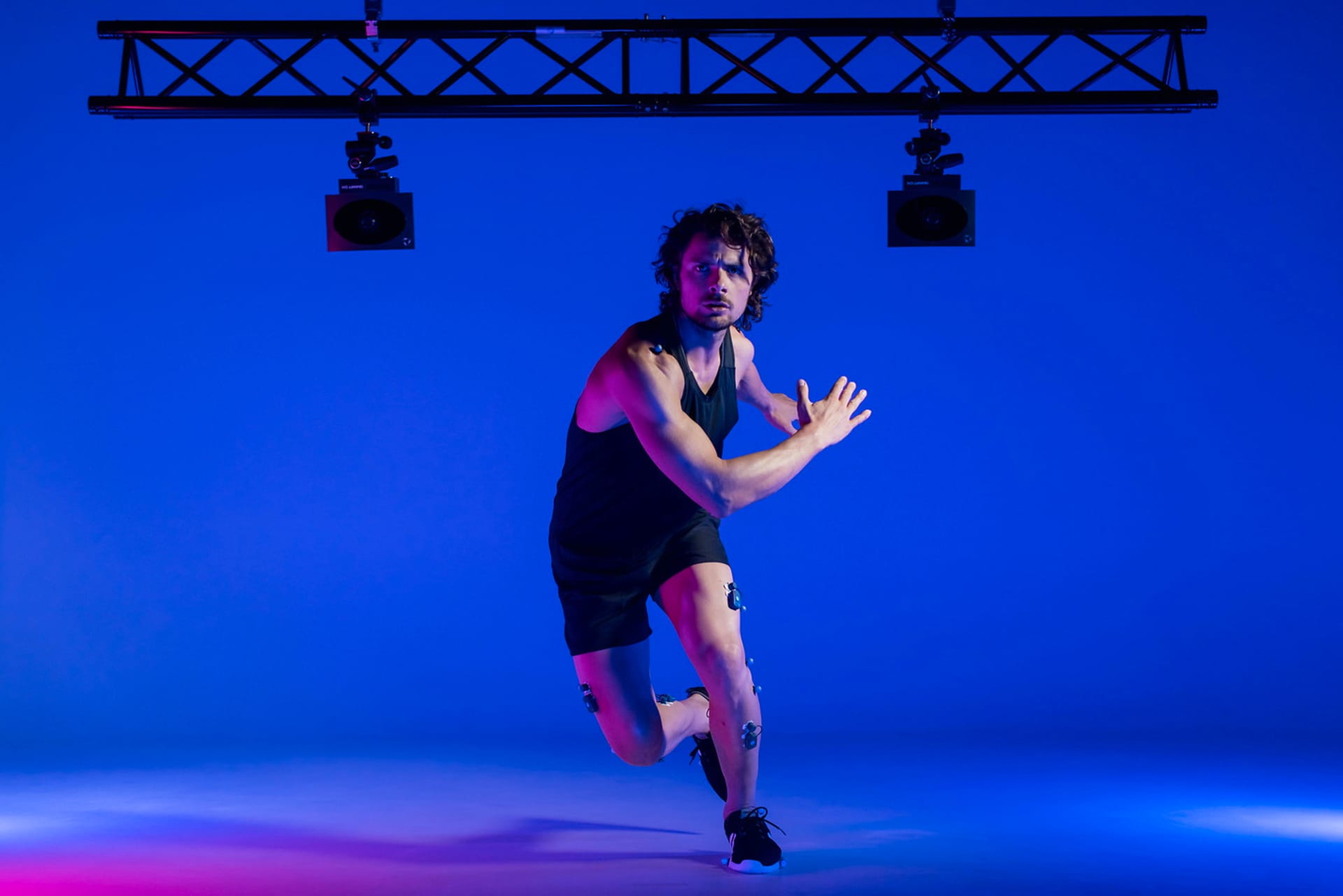
| BTS Sportlab – Full Markerless | 20-30 min | Laboratory | Full 3D Biomechanical & Functional Analysis | 3D Biomechanics | Full lab set-up with Color cameras |
| Sportlab – Hybrid | 30-40 min | Laboratory | Advanced 3D Biomechanical Analysis + Equipment Interaction | 3D Biomechanics (Gold Standard) | Full lab set-up with Hybrid cameras |
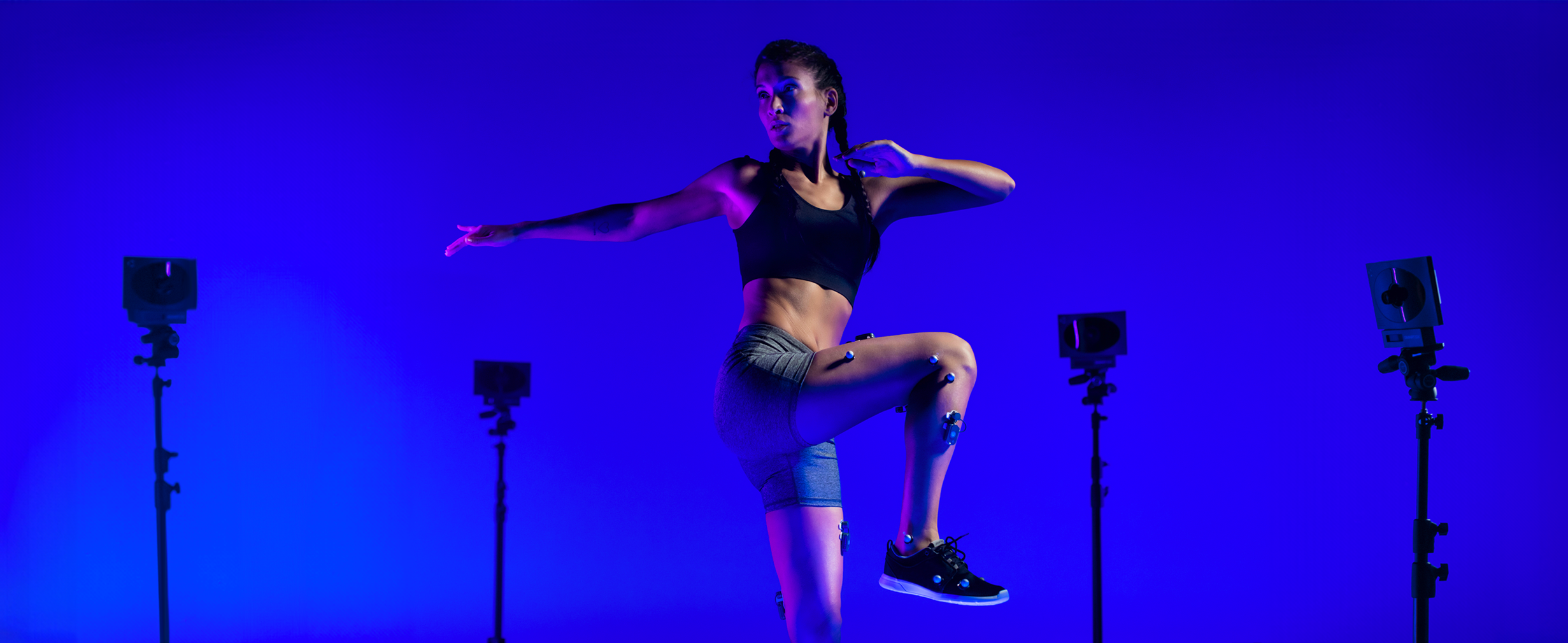
Motion analysis in sports is an objective biomechanical assessment of movement and athletic gestures. It helps improve performance, prevent injuries, and optimize training by measuring kinematics, forces, and muscle activation through reliable data.
Sports biomechanics helps understand how athletes move under load, identify asymmetries and compensations, and support data-driven decisions in training, injury prevention, and return to play.
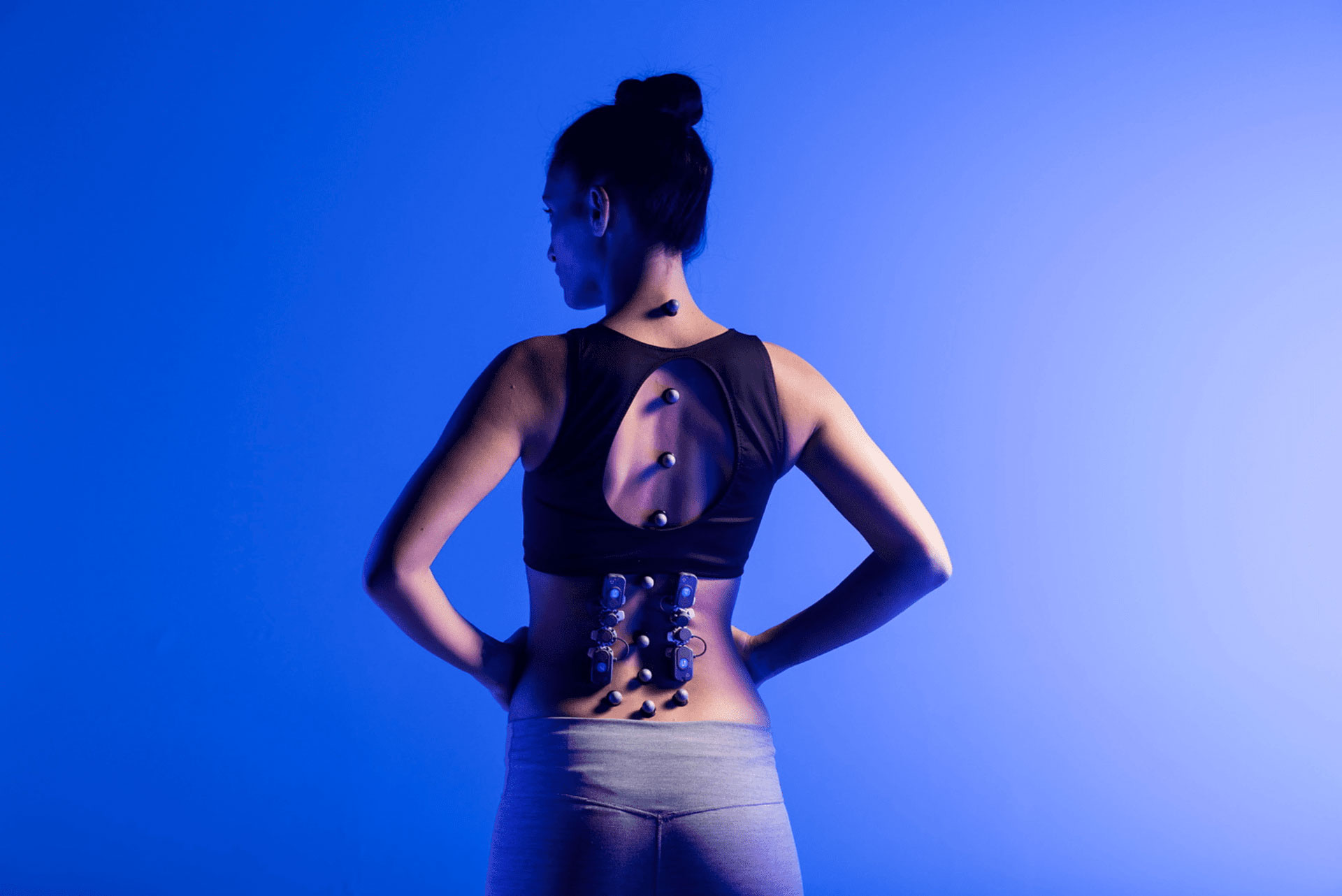
Wearable sensors are ideal for motion analysis in the field or gym, enabling fast, repeatable assessments of movement quality, symmetry, load, and neuromuscular control in sport-specific environments.
Inertial sensors analyze movement kinematics such as speed, acceleration, and range of motion, while EMG measures muscle activation. Combined, they provide a comprehensive assessment of motor control and neuromuscular strategies.
Yes. Scientifically validated wearable sensors offer high reliability even in elite and professional sports, allowing accurate biomechanical analysis during dynamic, high-intensity movements.
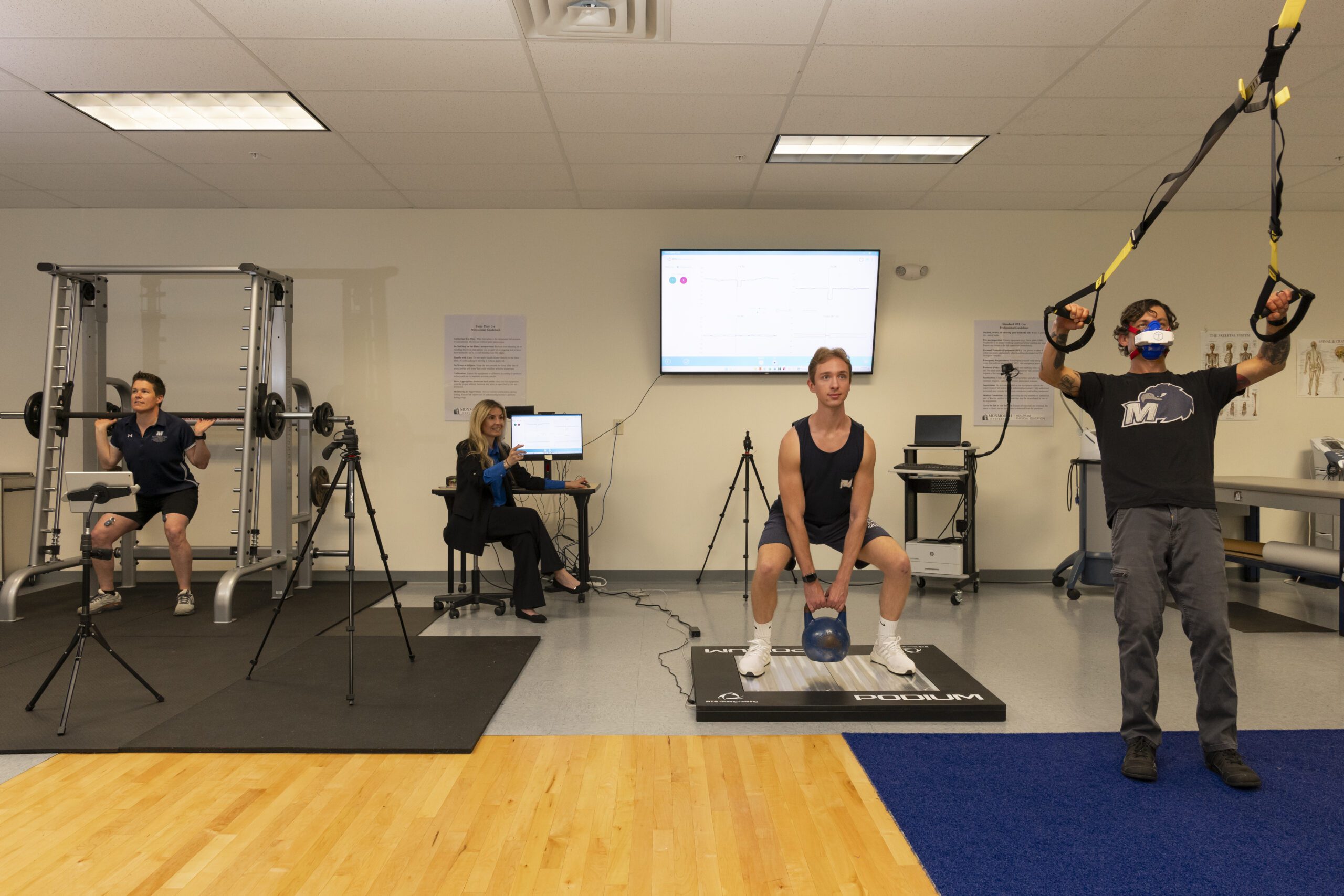
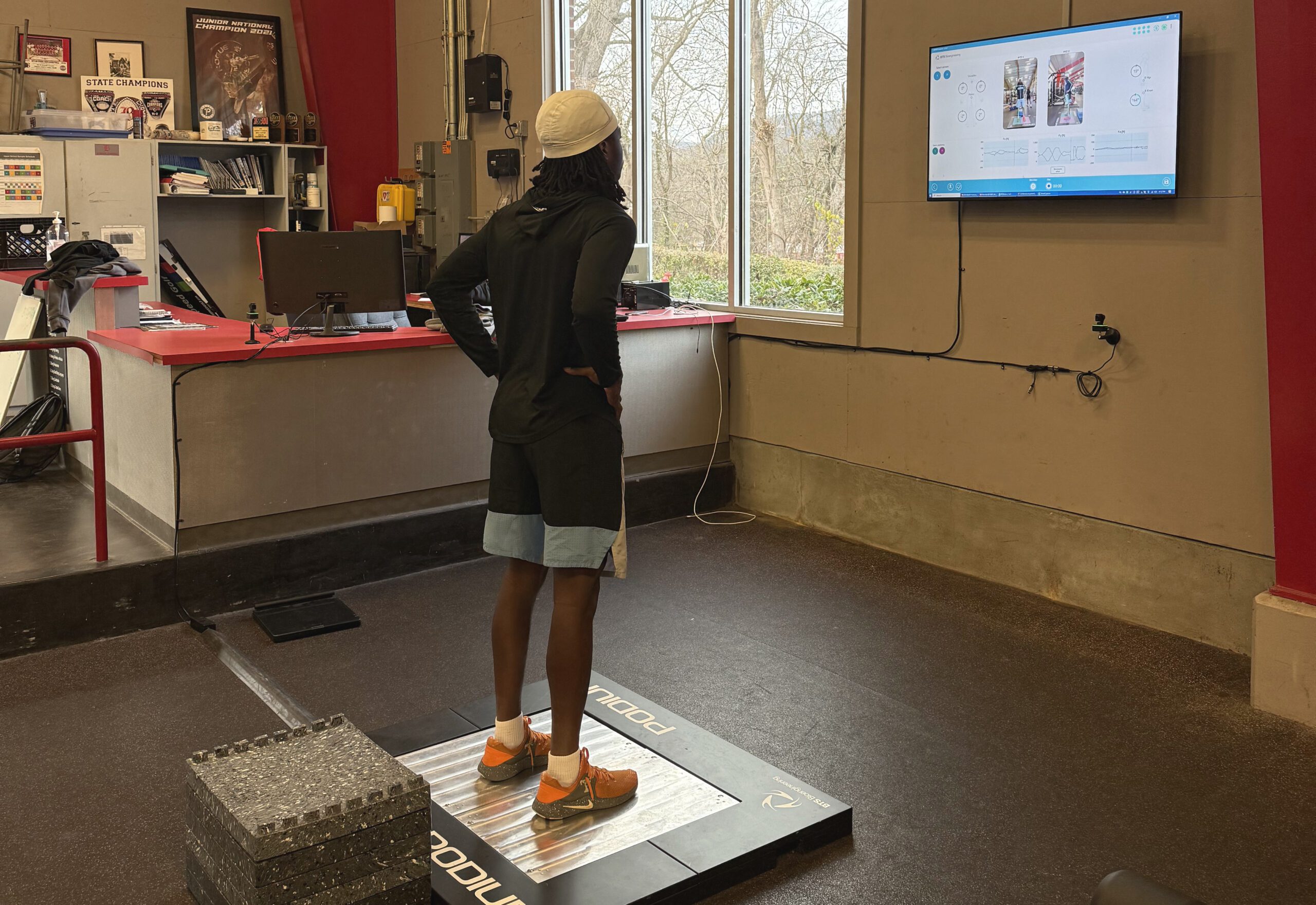
Force plates measure ground reaction forces and are essential for functional assessments, jump testing, asymmetry analysis, and return-to-play monitoring. Through biofeedback, they can also be used as training tools to improve motor control, symmetry, and movement quality.
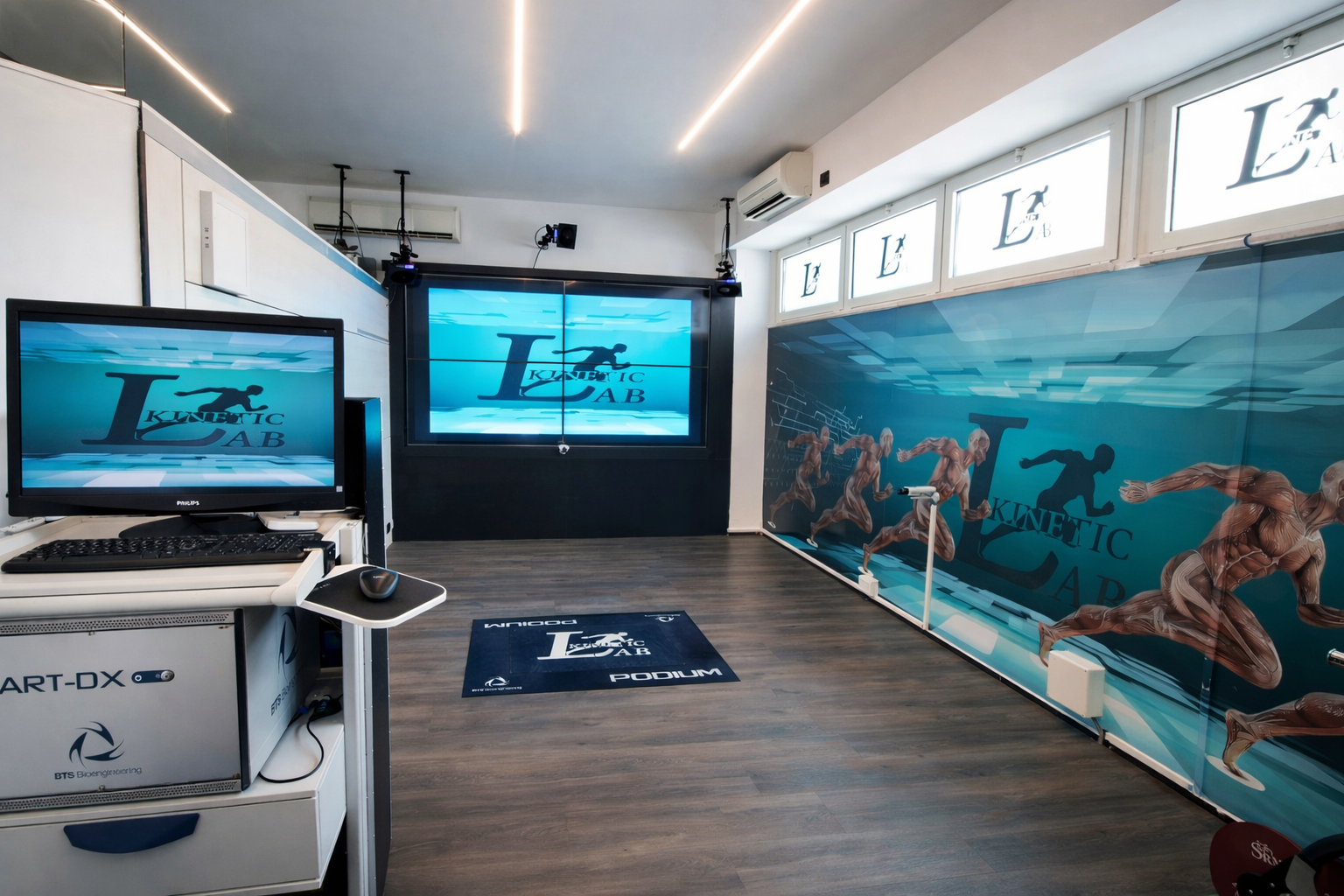
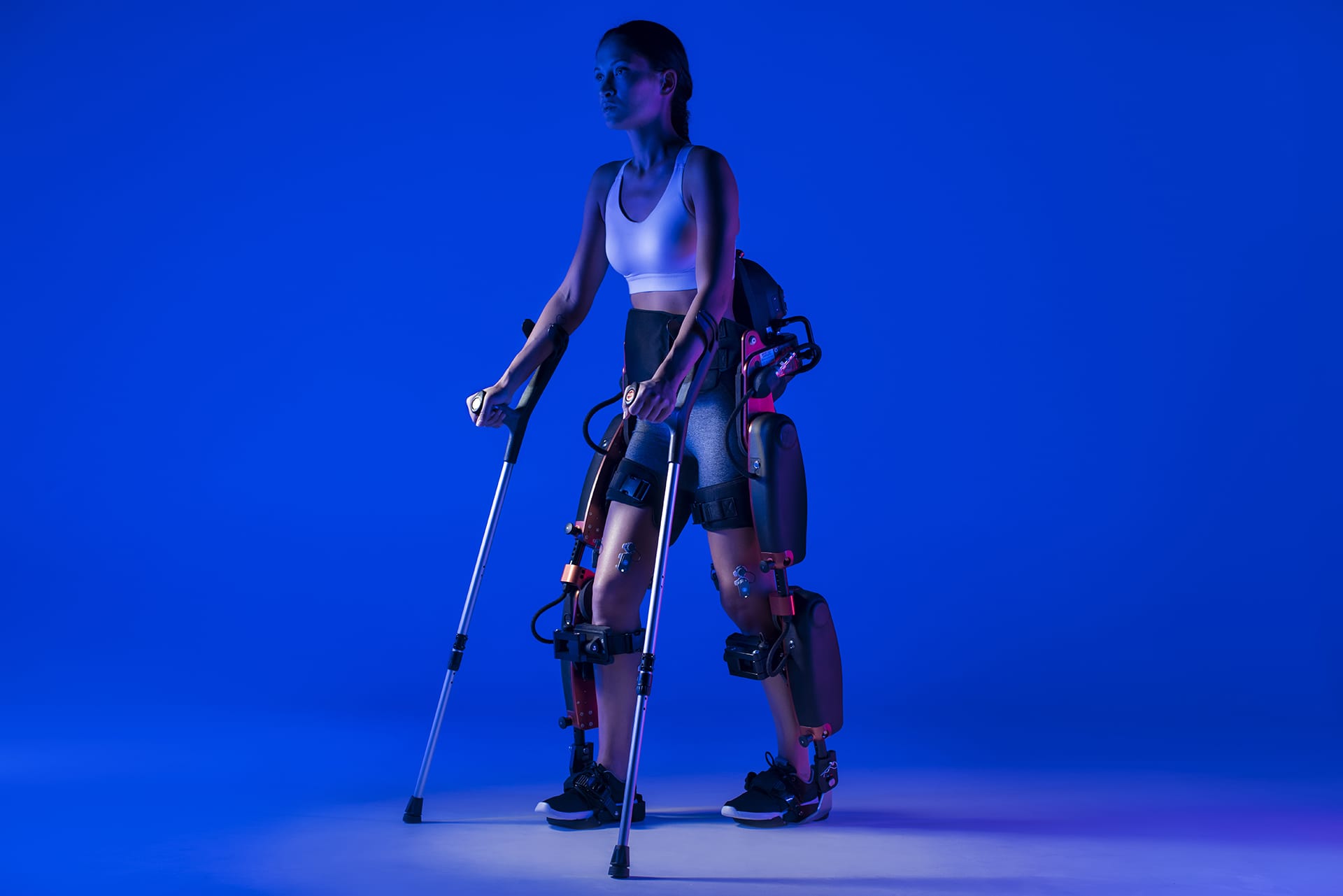
A sports biomechanics laboratory is required when assessments with wearable sensors or force plates reveal abnormalities compared to an athlete’s reference values or peer group (role, position, performance level). In these cases, full 3D motion analysis enables a deeper clinical understanding of movement and supports precise, individualized intervention planning, similar to advanced clinical practice.
Basic tests such as posture, postural control, gait, squat, and jumps provide essential biomechanical information about motor control, loading strategies, and functional asymmetries. Even in elite athletes, these tests offer more reliable and comparable insights over time than complex sport-specific gestures, which often introduce additional variables and reduce data interpretability for performance improvement.
No. Biomechanical motion analysis is also valuable in amateur and youth sports, as it improves movement quality, reduces injury risk, and makes training more effective and personalized.
Data-driven motion analysis reduces subjectivity, improves decision-making for coaches, therapists, and medical staff, and enables continuous, measurable monitoring of athletic performance over time.